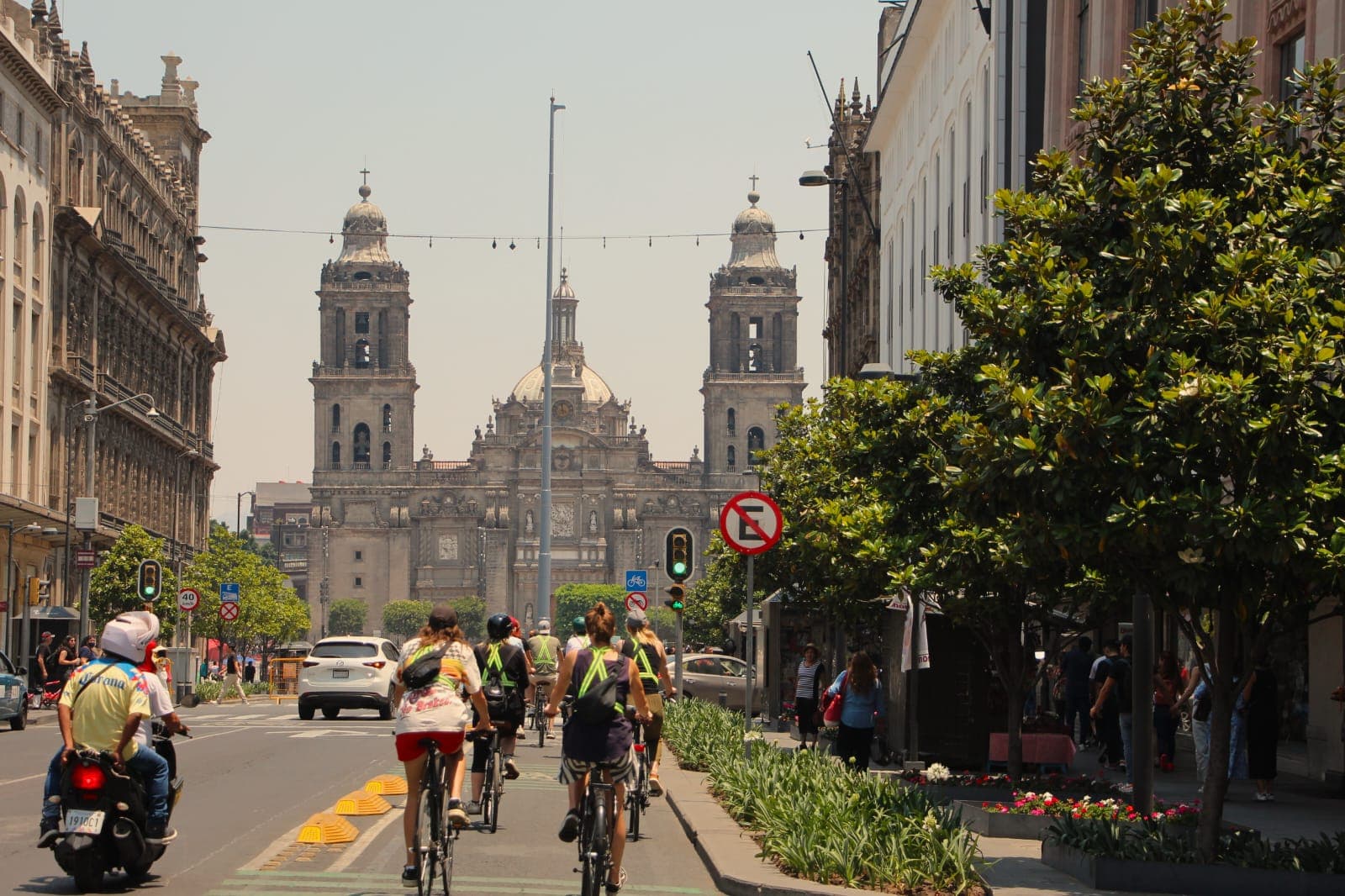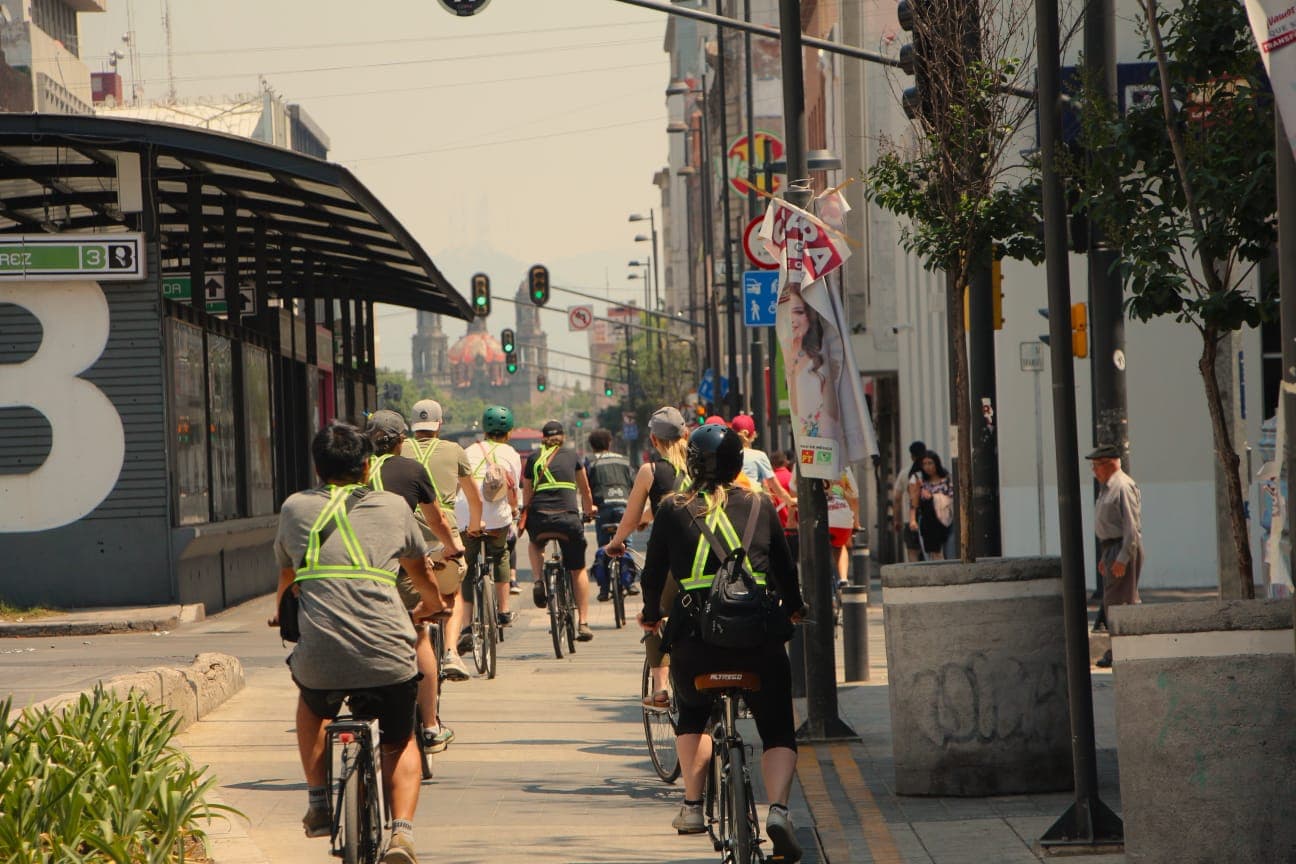
Mexico City has quietly become one of Latin America's best cities for cycling. In 2025, the city's network reached roughly 580 km of cycle paths across 651 sections (Visualiza MX, 2025). That's more protected cycling infrastructure than most North American cities can claim. And with flat terrain, year-round mild weather, and dedicated bike lanes connecting major neighborhoods, CDMX is surprisingly easy to explore on two wheels.
You don't need a guided tour to ride these routes (though we offer great ones). Grab an Ecobici pass, rent a bike, and follow these four self-guided routes through the city's best neighborhoods.
Key Takeaways
- Mexico City has 580+ km of cycle paths, with Ecobici recording 22.24 million trips in 2024 (Mexico Business News, 2025)
- Four tourist-friendly routes cover the city's highlights: Reforma, Chapultepec, Roma/Condesa, and Coyoacán
- The safest cycling neighborhoods are Roma, Condesa, Polanco, and Juárez
- Ecobici day passes cost $123 MXN (about $7 USD), or you can rent a bike for longer rides
Our four best routes across CDMX
Route 1: Paseo de la Reforma Ciclovía
Distance: ~7 km one way | Difficulty: Easy | Best time: Early morning or late afternoon
Paseo de la Reforma is Mexico City's grand boulevard, and its protected bike lane runs the full length. This is the route most tourists ride first, and for good reason. The lane is wide, well-maintained, and separated from traffic by a physical barrier.
Start near the Monumento a la Revolución and ride southwest toward Chapultepec Park. Along the way you'll pass the Ángel de la Independencia (the city's most photographed landmark), the Diana the Huntress fountain, and the glass towers of the financial district.
The ride is almost completely flat. Ecobici stations line Reforma every few blocks, so you can dock and walk whenever something catches your eye.
Pro tip: Ride early on weekday mornings to avoid crowds. On Sundays, the entire avenue closes to cars for Muévete en Bici, which draws over 20 million annual participants (Wikipedia). Check out our complete Muévete en Bici guide for the full Sunday experience.
Route 2: Chapultepec Park Forest Loop
Distance: ~5.5 km loop | Difficulty: Easy to moderate | Best time: Weekday mornings
Chapultepec Park is one of the largest urban parks in the Western Hemisphere, and its cycling circuit through Sections 1 and 2 covers roughly 5.5 km of shaded paths (AllTrails).
This loop feels like leaving the city entirely. Tall ahuehuete trees (some centuries old) line the paths, and the route passes the Castillo de Chapultepec (the only real castle in North America used as a royal residence), the Museo Nacional de Antropología, and several lakes.
The paths are paved but narrower than Reforma's bike lane. You'll share them with joggers and families, especially on weekends. Stick to Section 1 for the easiest riding. Section 3 is hillier and less maintained.
Getting there by bike: Ride the Reforma ciclovía southwest until it ends at the park entrance. Total distance from the Monumento a la Revolución is about 4 km.
Route 3: Roma and Condesa Neighborhood Loop
Distance: ~6 km loop | Difficulty: Easy | Best time: Any time
Roma and Condesa are the neighborhoods most tourists already stay in, and they happen to be two of the safest areas for cycling in CDMX. In 2024, these neighborhoods were identified among the safest for cyclists alongside Polanco and Juárez (Mexico News Daily, 2025).
The streets here are flat, tree-lined, and packed with cafés, galleries, and street art. There's no single "route" to follow. Instead, wander through these highlights:
- Parque México (Condesa): The oval park at the heart of Condesa, with Art Deco buildings all around it
- Avenida Ámsterdam (Condesa): A car-free oval track that circles the neighborhood, perfect for cycling
- Calle Orizaba (Roma): Lined with bookshops, vintage stores, and coffee roasters
- Parque España (Condesa): Smaller park with a great weekend market
- Huerto Roma Verde (Roma): Community garden and cultural space worth a stop
Ecobici stations are everywhere in both neighborhoods. You can grab a bike at any corner and drop it a few blocks later. This is the most flexible route on the list.
Route 4: Roma to Coyoacán
Distance: ~9 km one way | Difficulty: Moderate | Best time: Morning (arrive before Frida Kahlo Museum crowds)
This is the longest route on the list, but it's also the most rewarding. The ride from Roma/Condesa south to Coyoacán covers about 9 km (Where Sidewalks End, 2025) and takes you through residential neighborhoods that most tourists never see.
The route follows Avenida División del Norte for much of the way, which has a dedicated bike lane. The last stretch into Coyoacán's cobblestone center gets bumpier, so a hybrid or mountain bike works better than a road bike here.
Once in Coyoacán, lock your bike and explore on foot:
- Casa Azul (Frida Kahlo Museum): Book tickets online in advance
- Jardín Centenario: The main plaza with outdoor cafés and street performers
- Viveros de Coyoacán: A huge tree nursery and park, great for a cool-down walk
- Mercado de Coyoacán: Try the tostadas de tinga and a cold tejate
Important note: Ecobici doesn't have stations in Coyoacán itself. If you're using the bike-share, dock at the last available station (near Metro Coyoacán) and walk the final stretch. Or rent a bike from us for the full door-to-door ride.
How to Get a Bike
You have several options for getting on two wheels in CDMX.
Ecobici (bike-share): The city's system has grown to over 9,300 bikes across 689 stations, and it's expanding to 15,000 bikes by 2026 (Mexico Business News, 2025). Tourist day passes cost $123 MXN (about $7 USD). Each ride is limited to 45 minutes, but you can dock and undock as many times as you want. Download the Ecobici app to find stations in real time.
Bike rentals: If you want a comfortable bike for a full day without the 45-minute clock, we rent hybrid bikes by the hour or day. No membership needed.
Bicigratis (Chapultepec only): Free government bike loans inside the park. Bring your passport or official ID as a deposit. Limited availability on weekends.
Three ways to get a bike
9,300+ bikes, 689 stations. Day pass $123 MXN. 45-min ride limit.
Comfortable hybrids by the hour or day. No membership, no time limit.
Free government bikes inside the park. Bring passport as deposit.
Safety Tips for Cycling in CDMX
Mexico City's cycling infrastructure has improved dramatically. In 2025, the city began construction on the 36 km Ciclovía Gran Tenochtitlán, a dedicated cycle highway being built for the 2026 World Cup (Radkompetenz, 2025). That said, traffic here is intense, and you should ride smart.
- Stick to protected bike lanes whenever possible, especially on major avenues
- Avoid Insurgentes and Tlalpan unless you're experienced in heavy traffic
- Ride with traffic, never against it
- Watch for car doors opening from parked vehicles on side streets
- Use bike lights if riding after dark
- Don't ride on sidewalks. It's illegal and frustrating for pedestrians
- Wear a helmet. Rental shops and Ecobici don't always provide one, so consider bringing your own