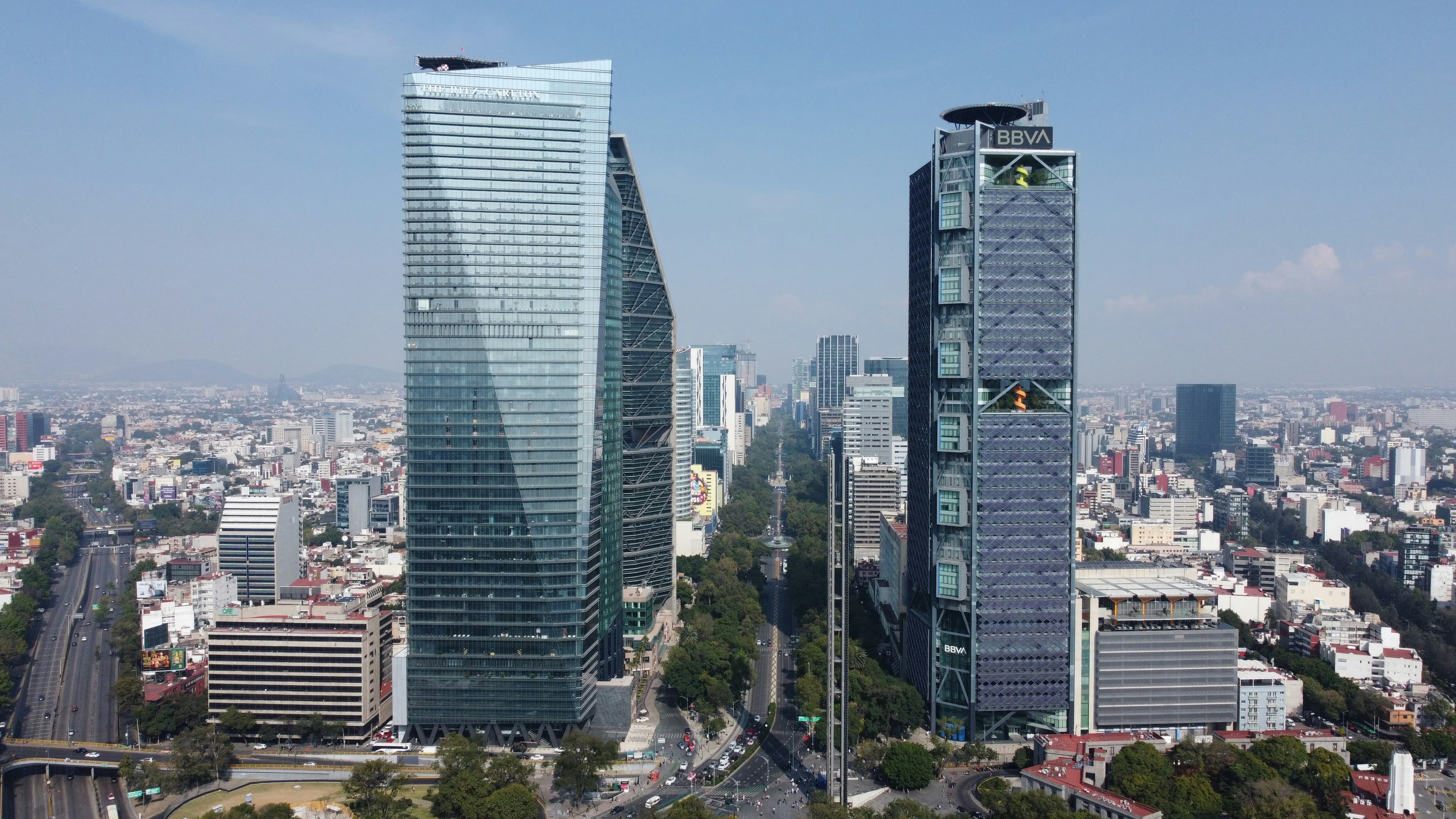
Three days isn't enough for Mexico City. Let's be honest about that upfront. But three days is enough to understand the city's rhythm, to feel how its layers stack on top of each other, and to leave knowing you'll come back.
Mexico welcomed 98.2 million international visitors in 2025, a 13.6% jump from the year before (Adept Travel, 2026). A huge chunk of those visitors start right here, in the capital. The trick isn't seeing everything. It's seeing the right things in the right order, so each day builds on the last.
This itinerary moves you from ancient to modern, from the dense historic core outward into the neighborhoods where the city actually lives. That's the flow most first-timers get wrong: they bounce between colonias without a sense of progression. Here, every day has a clear identity.
Key Takeaways
- Day 1 covers Centro Historico, where 1,550 historically protected buildings sit within 668 blocks
- Day 2 shifts to Roma Norte and Condesa for architecture, coffee culture, and leafy streets
- Day 3 heads to Coyoacan and the museum district for food, art, and a slower pace
- Guided tours (by bike or on foot) compress travel time and add context you can't get from a map
Why Does the Order of Your Days Matter?
Most Mexico City itineraries throw a list of attractions at you and call it a plan. That approach falls apart by lunch on day one, when you're exhausted and confused about where to eat. Pacing matters more than any single monument.
Centro Historico is dense, intense, and loud. You want it when you're fresh. Roma and Condesa are for walking slowly with a coffee. Coyoacan is your reward on day three, when you've earned the right to sit in a plaza and do nothing for an hour.
This structure also follows a geographical logic. You start in the center and spiral outward, which means less backtracking and more time doing what you came for.
Your 3-Day Route
Day 1: Centro Historico and the Ancient Core
Centro Historico holds 9,000 buildings across 668 blocks, with 1,550 of those buildings officially declared of historical importance (Wikipedia). That makes it one of the densest concentrations of colonial architecture in the Americas. You could spend a week here. You're going to spend a day, and that's fine, because it's enough to feel the weight of the place.
Start at the Zocalo
Get here by 8:30 a.m. before the crowds. The Zocalo (officially Plaza de la Constitucion) is one of the largest public squares in the world. Stand in the center and look around: the Metropolitan Cathedral to the north, the Palacio Nacional to the east, and the ruins of the Templo Mayor just behind the cathedral.
The cathedral is the largest on the continent at 109 meters long and 59 meters wide (UNESCO). It took nearly 250 years to build, which is why you can spot Gothic, Baroque, and Neoclassical elements all in one structure. Don't skip the inside. The tilting columns and the Altar de los Reyes are worth the ten minutes.
Templo Mayor
Walk behind the cathedral to the Templo Mayor museum. This is where the Aztec capital of Tenochtitlan once stood, and the archaeological site sits at the literal foundation of the colonial city built on top of it. The museum is compact and well-curated. Budget 60 to 90 minutes.
Palacio de Bellas Artes
From the Zocalo, walk west along Calle Madero (a pedestrian street packed with street performers and historic shopfronts) to the Palacio de Bellas Artes. The exterior is Art Nouveau marble; the interior is Art Deco. Diego Rivera's mural "Man, Controller of the Universe" is on the third floor. Entry to the murals is free on Sundays.
The best view of Bellas Artes isn't from the ground. Walk across to the Sears building on the corner of Madero and Eje Central. The top-floor cafe has a direct line of sight to the domed roof.Local tip
Street Food Lunch
By now it's lunchtime. Skip the sit-down restaurants near the Zocalo (overpriced, tourist-focused) and walk south toward Calle Regina. This pedestrian street has taco stands, juice bars, and small fondas where a full comida corrida runs about 80 to 120 MXN. Look for the places with the longest lines of office workers. That's your quality filter.
If you want a deeper dive into Centro's architecture and history, the Architectural Walks: Mexico City Center covers the highlights in about three hours with a local guide who can explain what you're actually looking at.
Afternoon: Torre Latinoamericana and Alameda Central
After lunch, take the elevator up Torre Latinoamericana for a panoramic view of the city. On a clear day (more common from November to March), you can see the volcanoes. Then wind down with a walk through Alameda Central, Mexico City's oldest public park.
You'll be tired. That's normal. Centro is sensory overload by design. Head back to your hotel, rest, and save your energy for tomorrow's slower pace.
Day 2: Architecture, Neighborhoods, and Coffee Culture
Roma Norte was founded in 1903 as a residential district for Mexico City's upper class, modeled after Parisian boulevards with tree-lined streets and Art Nouveau mansions (Lonely Planet). Today it's the city's creative and culinary heart. Day two is a deliberate downshift from Centro's intensity.
Morning in Roma Norte
Start on Avenida Alvaro Obregon, Roma's main artery. The median strip has a pedestrian walkway with fountains, sculptures, and benches under old trees. Walk slowly. The architecture here shifts every few blocks: Porfirian stone mansions sit next to 1940s apartment buildings and converted-warehouse cafes.
Stop for breakfast at any of the specialty coffee shops along Calle Orizaba or Calle Colima. Roma has one of the best third-wave coffee scenes in Latin America, with roasters pulling beans from Chiapas, Oaxaca, and Veracruz. Expect to pay 60 to 90 MXN for a quality pour-over.
The magic of Roma happens between destinations. Don't rush from point A to point B. The wrought-iron balconies, the tile work on old apartment facades, the random street art on a parking garage wall: that's the neighborhood revealing itself. Give yourself permission to wander.
Two Neighborhoods, Two Vibes
Porfirian mansions, third-wave coffee, creative energy, and a trending dining scene. Best for architecture, food, and nightlife.
Art Deco apartments, tree-lined boulevards, Parque Mexico, and sidewalk dining. Best for walking, parks, and a slower pace.
Covering More Ground by Bike
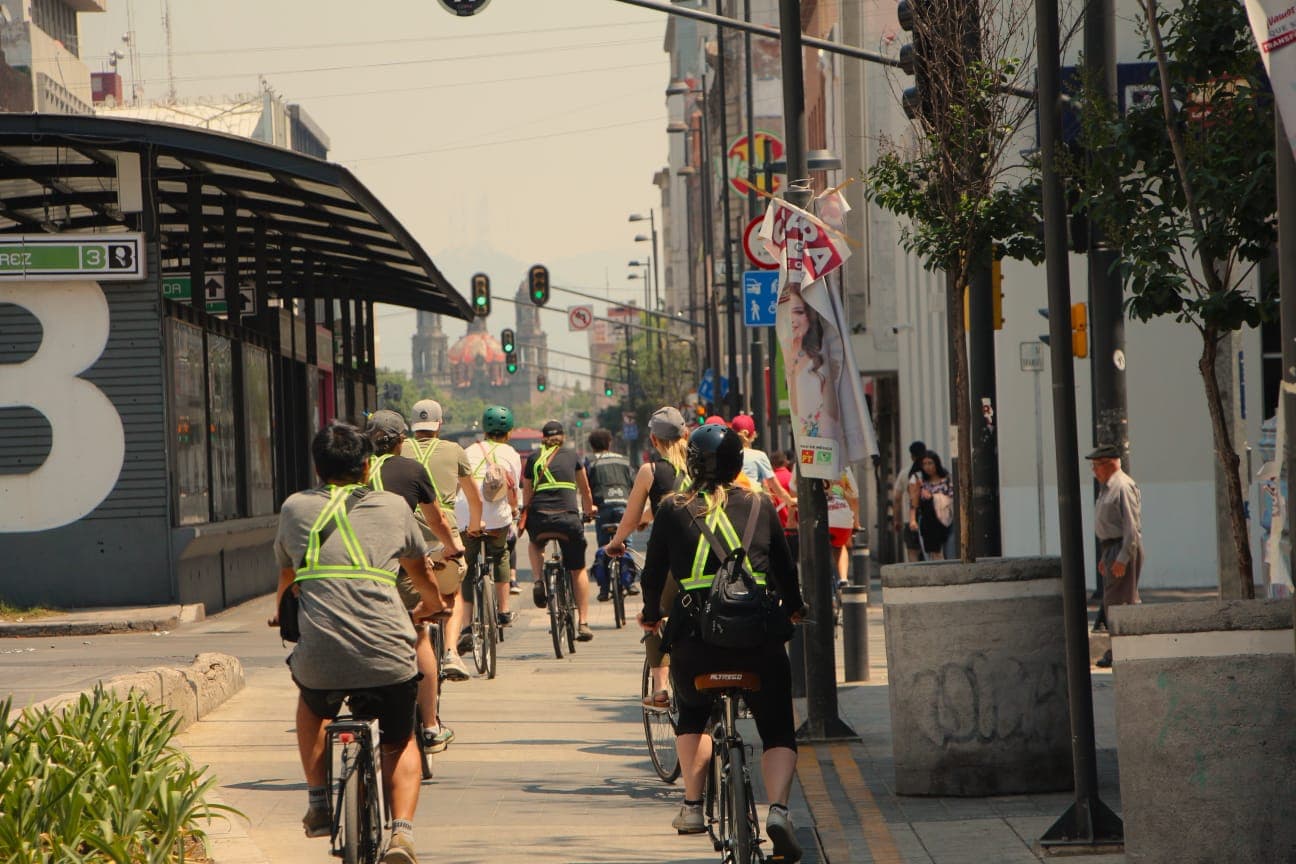
If you want to see both Roma and Condesa without exhausting your legs, a bike changes everything. The flat terrain and growing network of bike lanes make these neighborhoods ideal for cycling. You can rent a bike and set your own pace, or join the Architecture Highlights Bike Tour to cover 20 kilometers of the city's best buildings in a single morning.
Afternoon: La Condesa
Walk (or pedal) south into Condesa. You'll notice the shift immediately: more trees, wider sidewalks, Art Deco apartment buildings with curved balconies. Condesa was once home to Mexico's biggest film stars in the 1940s and 1950s, and it still has that slightly glamorous feel.
Parque Mexico is the neighborhood's anchor. It's a sunken park with an Art Deco bandstand, dog walkers everywhere, and couples on benches. Circle the park, then explore the streets radiating outward. Avenida Amsterdam follows the old horse-racing track in an oval loop, lined with restaurants and boutiques.
For lunch, you're spoiled for choices. Condesa and Roma together form one of the most exciting dining districts in the Americas. Pick a sidewalk table, order something you can't pronounce, and trust the kitchen.
Evening: Mercado Roma or Local Mezcaleria
If you want a guided food experience, the Taco Bike Tour: Michelin Guide Edition runs through these neighborhoods and hits spots you'd never find on your own. Otherwise, end the evening at a mezcaleria on Calle Durango or a rooftop bar along Avenida Insurgentes.
Day 3: Museums, Coyoacan, and the Culture Scene
Mexico City has more than 150 museums, making it one of the most museum-dense cities on the planet (Wonderful Museums). Day three is about picking the right ones, not trying to see them all.
Morning: Pick Your Museum
You have two excellent options, and they're very different experiences:
Museo Nacional de Antropologia (Chapultepec Park): This is the heavyweight. One of the finest museums in the world, with the largest collection of pre-Hispanic artifacts anywhere. The Aztec Sun Stone alone is worth the trip. Budget at least two hours, ideally three. It's in Chapultepec Park, so you can walk the grounds afterward.
Museo Frida Kahlo (Coyoacan): Smaller, more intimate, and deeply personal. The Blue House where Frida lived and worked is preserved almost exactly as she left it. Book tickets online in advance. This place sells out, especially on weekends.
If you choose the Anthropology Museum in the morning, take a taxi or metro to Coyoacan for the afternoon. If you start at the Frida Kahlo Museum, you're already in Coyoacan. Either way, you end up in the same place.
Afternoon: Coyoacan
Coyoacan feels like a small town that got absorbed by the city (because that's exactly what happened). The main plaza, Jardin Centenario, has a fountain, a church, and a ring of cafes. The pace is noticeably slower here. Families eat ice cream. Old men read newspapers. Street vendors sell churros and esquites.
Walk the cobblestone streets around the market (Mercado de Coyoacan) and the Jardin Hidalgo. If you want to go deeper into the neighborhood, the Coyoacan Off the Beaten Track tour covers 14 kilometers of backstreets, murals, and local haunts that most tourists never see.
Coyoacan is also where you'll find some of the best traditional Mexican food in the city. Not the fusion stuff you find in Roma, but the slow-cooked, multi-generational recipes: mole, tlacoyos, and tostadas piled high with tuna (the cactus fruit, not the fish). Eat at the market, not the restaurants on the main plaza.
Evening: Your Last Night
You've covered the historic core, the trendy middle ring, and the cultural south. For your last dinner, go back to wherever felt most like "your" neighborhood. For most first-timers, that's Roma or Condesa. Book a reservation this time. You've earned a proper sit-down meal.
Practical Tips That Actually Help
Transportation: Metro is fast and cheap (5 MXN per ride). Uber works well and is inexpensive by international standards. For neighborhoods like Roma and Condesa, walking and biking beat everything else. Check out our bike rental options if you want wheels for a full day.
Money: Most places accept cards, but carry cash for markets, street food, and small shops. ATMs inside banks are the safest option. Tip 10 to 15 percent at sit-down restaurants.
Safety: Use the same common sense you'd use in any major city. The neighborhoods in this itinerary (Centro, Roma, Condesa, Coyoacan) are well-traveled and well-policed tourist areas. Stick to main streets at night and use rideshare apps after dark.
Language: Basic Spanish helps enormously, but you'll manage with English in most tourist-facing establishments. Learn "por favor," "gracias," and "la cuenta, por favor" at minimum. It goes a long way.
Have more questions? Check our FAQ page or browse the photo gallery to see what a day on our tours actually looks like.
Your Three Days Start Here
Mexico City rewards the visitor who doesn't try to do everything. By moving from the ancient center outward to the neighborhoods, you'll feel the city's layers instead of just photographing them.
And if you want a local perspective on any of these areas, that's what we do. Whether it's a bike tour through the architectural highlights, a walking tour of Centro's hidden details, or a day exploring Coyoacan's backstreets, having a guide who lives here changes the experience from tourism to understanding.
Browse all tours →